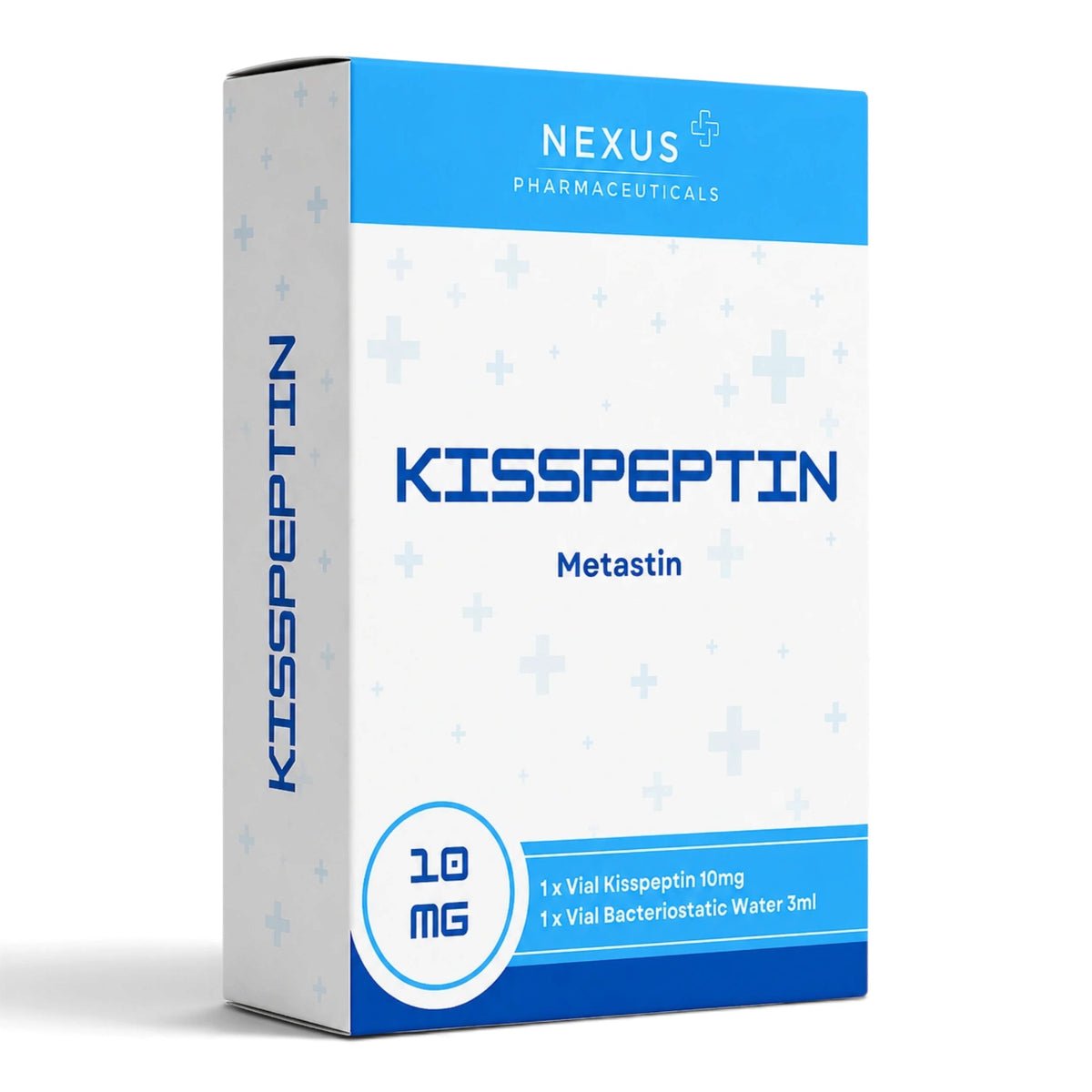
KISSPEPTIN 10MG
KISSPEPTIN 10MG
Kisspeptin is the upstream neuropeptide that controls testosterone, fertility, and libido by triggering the entire HPG axis. If testosterone is the engine, kisspeptin is the ignition switch.
Kisspeptin is a neuropeptide produced by neurons in the hypothalamus, encoded by the KISS1 gene. It was originally discovered in 1996 as a metastasis-suppressor gene, but its more important role turned out to be in reproduction and hormone regulation.
It binds to the GPR54 receptor (also called KISS1R) on GnRH-producing neurons. When kisspeptin activates GPR54, those neurons release GnRH (gonadotropin-releasing hormone), which then signals the pituitary to release LH and FSH — the two hormones that tell the testes or ovaries to produce sex hormones.
Kisspeptin Benefits :
Natural Testosterone Support
This is the headline benefit and the main reason kisspeptin gets attention in the men’s hormone optimization space. Because kisspeptin acts at the very top of the cascade, it prompts the body to produce its own testosterone through the natural pathway — LH → Leydig cells → testosterone.
Unlike exogenous TRT, kisspeptin does not shut down endogenous production. It does the opposite: it activates it. This makes it interesting for men who want to support testosterone without committing to lifetime TRT and the testicular shutdown that comes with it.
Fertility and Sperm Production
Kisspeptin’s role in driving FSH release makes it directly relevant to fertility. FSH supports spermatogenesis in men and follicular development in women. Clinical research has explored kisspeptin (particularly kisspeptin-54) as a trigger for ovulation in IVF protocols, where it appears to reduce the risk of ovarian hyperstimulation syndrome compared to standard hCG triggers.
For men with low sperm counts or hypogonadotropic hypogonadism (where the brain isn’t sending enough hormonal signal to the testes), kisspeptin is being studied as a way to restore the upstream signal.
Libido and Sexual Desire
Kisspeptin neurons project into brain areas involved in sexual arousal and emotional processing (not just the reproductive cascade). Clinical studies in healthy men have shown that kisspeptin administration can enhance limbic brain activity in response to sexual and bonding stimuli, independent of testosterone changes.
The effect is more subtle than something like PT-141, which acts directly on melanocortin pathways, but it is meaningful for users who feel their libido has flattened over time.
HPG Axis Recovery (Post-Cycle or Post-TRT)
For people coming off testosterone or anabolic protocols, the HPG axis needs to restart. Standard PCT (post-cycle therapy) tools work downstream — clomiphene and tamoxifen block estrogen feedback, hCG mimics LH at the testes. Kisspeptin offers an upstream option that more closely mimics the natural restart pathway.
Mood and Emotional Regulation
Beyond reproduction, kisspeptin neurons connect to mood-regulating regions of the brain. Some users report subtle improvements in motivation, drive, and emotional resilience.
Reconstitute : Add 3.0 mL bacteriostatic water (3 units = 100mcg)
Typical daily range : 100–200 mcg once daily (gradual titration).
Dosing Protocol :
Suggested daily titration approach.
- Start: 100mcg daily for 1-2 weeks to assess sensitivity.
- Titrate: Increase to 200mcg daily if tolerated and necessary.
- Frequency: Once per day (subcutaneous).
- Cycle Length: 8-12 weeks; avoid prolonged continuous use to prevent tachyphylaxis.
- Timing: Any consistent time; rotate injection sites.
Weeks 1-2 : 100mcg = 3 units
Weeks 3-8 (or 3–12) : 200mcg = 6 units
Couldn't load pickup availability
Low stock: 10 left
View full details